Breaking Bad 101
The Complete Critical Companion
The ultimate guide to the greatest show on television. Deep analysis, behind-the-scenes secrets, and exclusive insights.


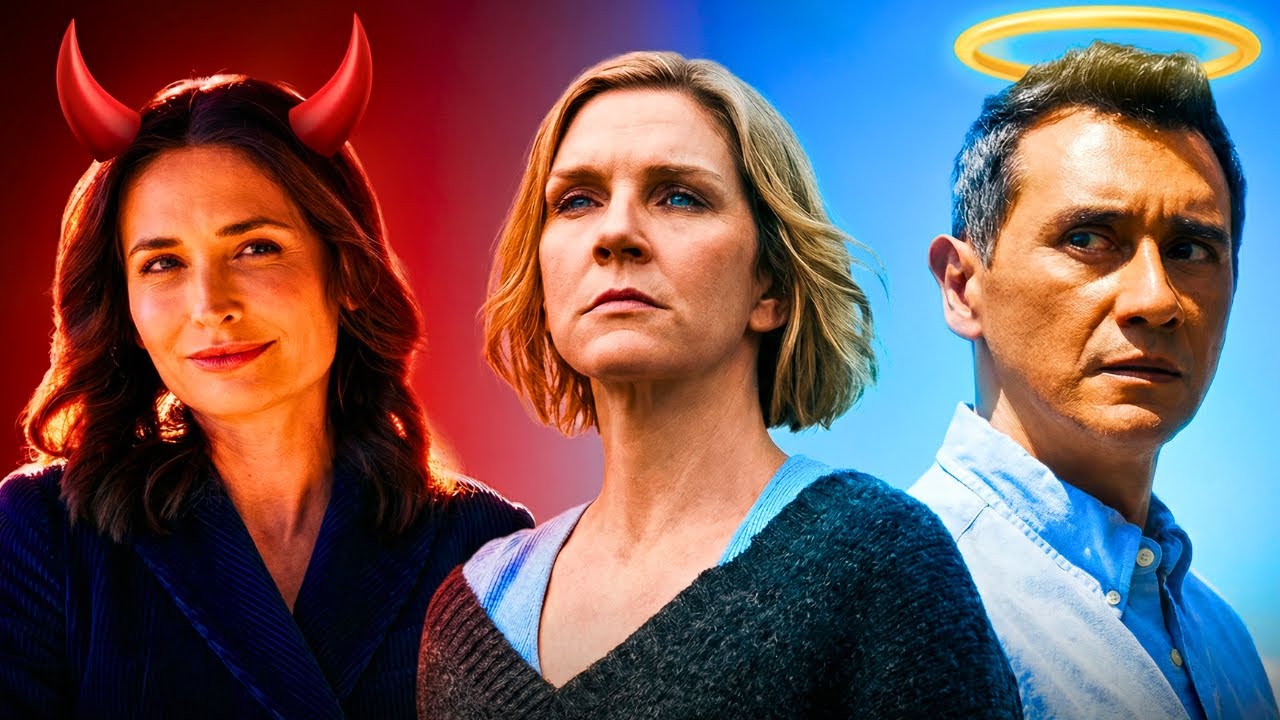
Pluribus has generated a culture of intense speculation, and for good reason: the TV show plants enigmas with surgical precision, then watches viewers assemble explanations from small clues. Theories about Season 2 range from plausible extensions of worldbuilding to wild metaphysical conjectures, but they share a common value—each forces us to reconsider what the series has been testing all along: governance under stress, informational power, and the ethics of survival.
Whether a theory turns out to be canonical matters less than the questions it provokes. In that sense Pluribus functions as a narrative laboratory; the most productive theories illuminate the show’s recurring preoccupations rather than merely offering a shock reveal.
One of the more grounded theories holds that the Galaxy signal is not a mystical beacon but an activation mechanism that triggers latent biological or technological pathways. This explanation fits with how the TV show treats causal chains: systems are designed with brittle dependencies, and a targeted input—whether electromagnetic, biochemical, or informational—could plausibly set cascade effects in motion.
If this is true, Season 2 would reasonably focus on tracing provenance: who built the contingencies, why were they dormant, and which institutions benefit from activation? The strength of this theory is its alignment with Pluribus’s interest in human agency; it keeps responsibility within reach and turns the mystery into a probe of accountability rather than cosmic inevitability.
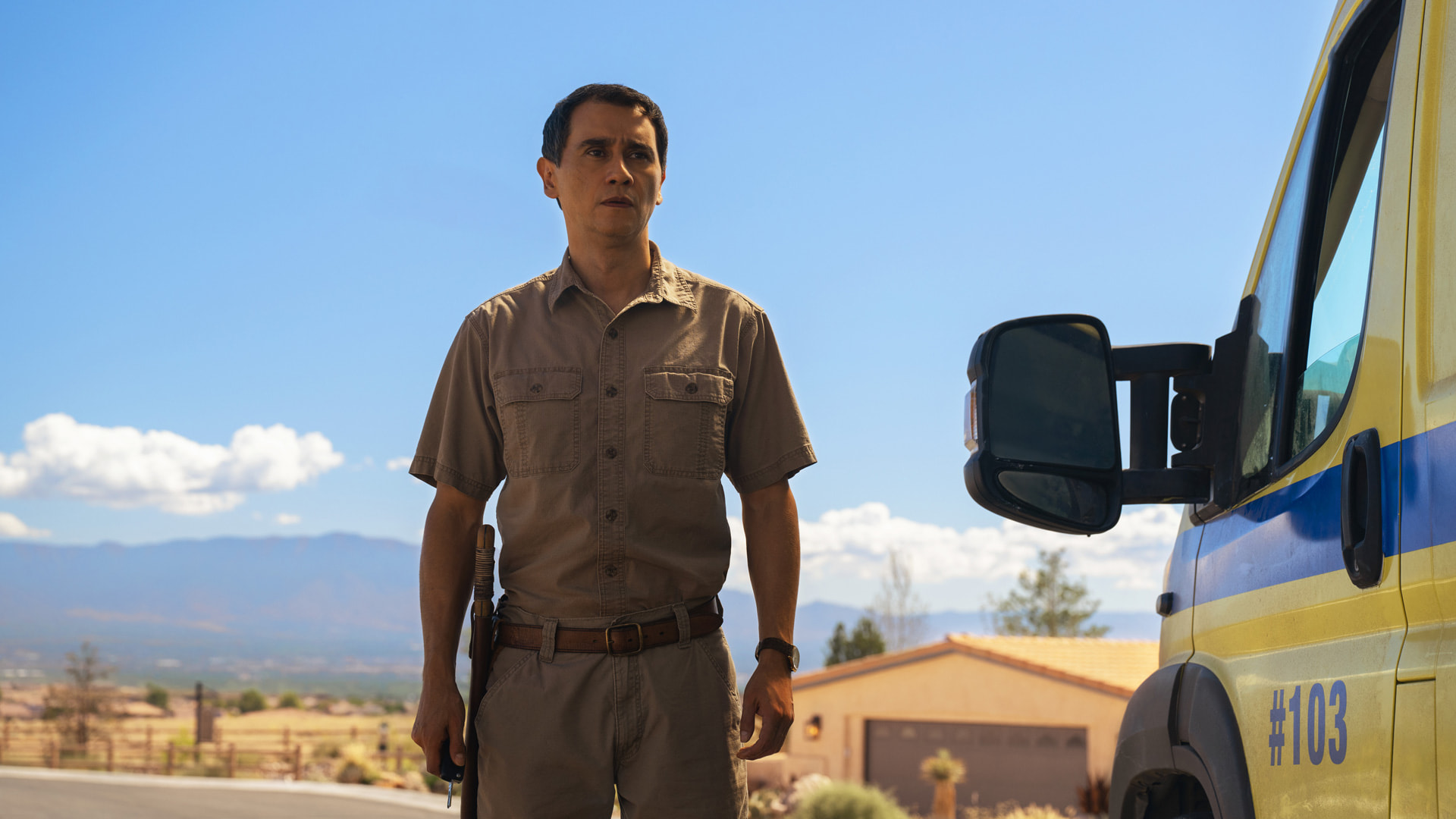
Another theory gaining traction reframes the signal as the seed of a slow, ecological intervention—less extraterrestrial invasion and more biological engineering designed to remodel ecosystems. This idea is attractive because it preserves the show’s intimate stakes while introducing an unsettling scale: the virus and environmental shifts would be part of an engineered succession, not immediate conquest.
Season 2 exploring this route would likely emphasize subtle environmental cues—changes in flora and animal behavior, adaptive benefits that accrue to particular organisms, and human bodies gradually becoming hospitable substrates. This theory is compelling narratively because it allows Pluribus to meld speculative biology with the social-political questions it already foregrounds, asking what adaptation looks like when the environment itself is being edited.
Perhaps the most narratively satisfying theory for a character-driven series is that the crisis is a human-made artifact—an experiment, a weapon, or a misguided attempt at population control. If Season 2 proves this true, the stakes become legal and moral rather than metaphysical.
The TV show would then pivot into investigative territory: whistleblowers, archival sleuthing, and institutional reckonings. That trajectory aligns with Pluribus’s interest in accountability and complicity, and it would deepen the show’s ethical inquiry by forcing characters and viewers to confront human motives—profit, fear, ideology—behind catastrophic outcomes. This theory also sustains dramatic tension; it invites courtroom-like confrontations and bargaining that are fertile ground for the show’s nuanced performances.
Given the show’s complexity, a hybrid explanation is arguably the most plausible: the signal may be technological in origin but enabled by human systems, or it could be an external input amplified by preexisting social vulnerabilities.
Pluribus has already suggested that catastrophe rarely has a single cause; collapse is usually the product of interacting faults. A layered answer would permit Season 2 to explore the interplay between design, environment, and governance—how human choices create susceptibilities that external forces exploit, and how emergent authorities respond. This approach keeps the narrative open-ended while rewarding attentive viewers with the kind of multi-layered payoff the series has been building toward.
Regardless of which theory proves correct, the debate itself clarifies Pluribus’s thematic priorities. Most durable theories focus less on spectacle and more on mechanisms: who built what, who benefits, and who pays the price.
That emphasis underscores the TV show’s interest in systems—legal, technological, ecological—and their human authors. Fans who prefer answers about aliens or supernatural forces may be disappointed if creators stick with institutional explanations, but such choices reinforce the show’s ethical ambition: to make responsibility traceable and to dramatize the consequences of human decisions.
For the series to remain compelling, Season 2 will need to balance revelation with continued ambiguity. Providing a clear origin could be narratively satisfying, but locking the story into a single explanation risks diminishing the show’s moral complexity.
The most productive path is one that offers partial answers—specific facts that reframe characters’ actions—while preserving larger uncertainties about meaning and motive. That way Pluribus can deliver investigative payoff without abandoning the open-ended ethical inquiry that makes the TV show feel urgent and resonant.
Ultimately, the most useful theories about Pluribus are those that deepen our understanding of the series’ core concerns: accountability, adaptation, and the social costs of information asymmetry. Whether the Galaxy signal is alien, engineered, or both, the narrative value lies in how characters and institutions respond. Season 2’s revelations will matter most if they sharpen those responses and force characters into recognizably human moral work. Until then, the best theories function as interpretive tools, helping fans track the show’s commitments and imagine how its ethical laboratory might evolve.
Pluribus concludes its inaugural season with Episode 9, “La Chica o El Mundo,” an ending that reframes earlier narrative...
Discussion around Pluribus has intensified since Season 1 concluded, with fans and commentators submitting theories that range from plausible...
Pluribus arrives as a deliberately paced, idea‑driven series that has polarized audiences and critics. The Apple TV show foregrounds...
For Pluribus, the Apple TV series from Vince Gilligan, production designers constructed an entire cul‑de‑sac in Albuquerque to serve...

© 2025 PLURIBUS SERIES | We are not affiliated with Apple TV+, our content is not official or endorsed by them in any way.