Breaking Bad 101
The Complete Critical Companion
The ultimate guide to the greatest show on television. Deep analysis, behind-the-scenes secrets, and exclusive insights.



For Pluribus, the Apple TV series from Vince Gilligan, production designers constructed an entire cul‑de‑sac in Albuquerque to serve as the show’s primary domestic landscape. The faux neighborhood reads as ordinary on camera but required extensive planning, infrastructure work, and aesthetic calibration to support the series’ documentary‑adjacent approach. The result is a set that functions narratively as much as visually, allowing the TV show to stage procedural drama within a convincing lived environment.

The production prioritized practical authenticity, aiming to make the cul‑de‑sac look like a neighborhood that had evolved over decades rather than a studio backlot. Production Designer Denise Pizzini and set decors selected repurposed materials, weathered signage, and vernacular architectural details to avoid glossy, theatrical surfaces. The goal was an environment that actors could inhabit naturally and that camera work could read as documentary evidence rather than artificial ornament.
Attention to quotidian detail was central: mailboxes, hand‑painted notices, patched sidewalks, and mismatched fencing were deliberately included to signal long‑term habitation and improvisation. These elements serve a dramaturgical function in Pluribus—the show treats artifacts, ledgers, and posted memos as sources of narrative proof—so physical authenticity supports the series’ forensic storytelling. The result on screen is a neighborhood that feels like a social organism rather than a constructed backdrop.

Constructing the cul‑de‑sac on location in Albuquerque involved coordination with municipal authorities, local contractors, and neighborhood stakeholders. The production team negotiated permits, traffic plans, and temporary utility hookups to make the site filmable while minimizing disruption. Local crews were engaged for carpentry, painting, and landscaping, which both sped construction and rooted the set in regional craft practices.
Logistics extended beyond construction to operational considerations: staging areas for wardrobe and props, secure storage for set dressings, and support for cast and crew during extended shoots were all factored into scheduling. The production’s investment in on‑site infrastructure allowed for complex shooting schedules—daylight‑dependent interiors, exterior continuity, and ambient sound recording that contributed to the show’s restrained soundscape. Locals noted economic benefits from job creation and rental use, while production managers emphasized community relations as a priority.
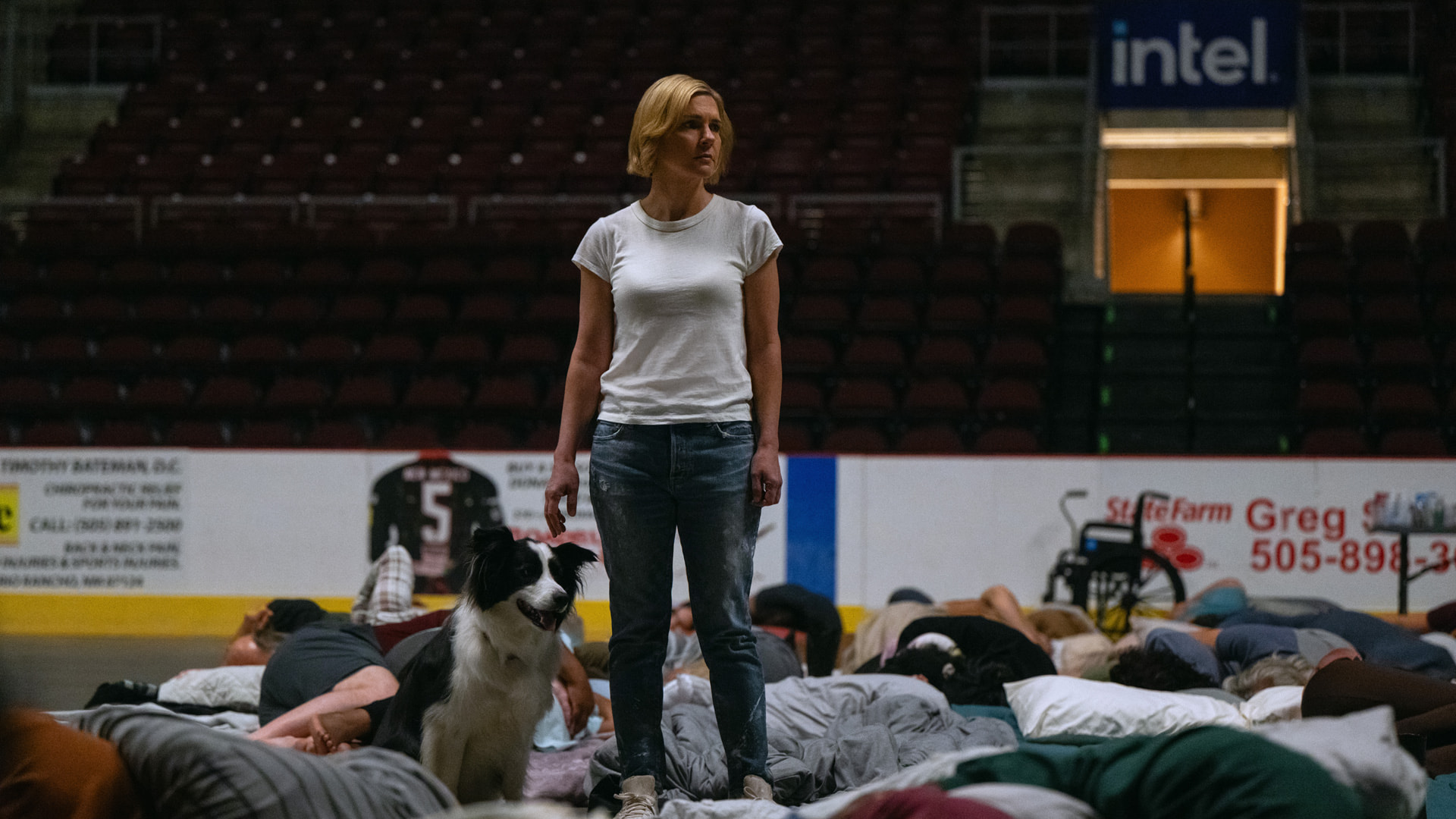
Cinematographers worked closely with designers to ensure the cul‑de‑sac read properly on camera for Pluribus’s tonal aims. The show favors medium framing and close work on hands, documents, and faces, so set elements were composed to register in these scales. Practical lighting—streetlamps, porch lights, and interior fixtures—was integrated into design to create organic night exteriors and believable domestic interiors without heavy reliance on postproduction effects.
Production decoration also doubled as narrative shorthand. Signs, posted notices, and community boards were scripted to contain legible text that could be referenced in scenes, converting props into plot devices. That integration enabled the show to use the physical environment as a storytelling instrument: a ledger on a kitchen table or a stamped authorization on a noticeboard could function as decisive evidence in a later council sequence. Sound teams recorded ambient textures—distant traffic, creaking gates, and wind through scrub—to reinforce the neighborhood’s lived quality.
Actors working in the cul‑de‑sac reported that the practical environments enhanced performance authenticity. The ability to interact with materially specific props—an actual ration card, a worn table, or a real mailbox—allowed for micro‑behaviors that the camera could translate into subtext. That performative subtlety is central to Pluribus’s aesthetic; the show trades exposition for implication, and the neighborhood set supports that trade by enabling credible, low‑key interactions.
Audience and critical responses have highlighted how the neighborhood’s ordinariness amplifies the series’ unsettling premise. Fans have noticed that the most affecting moments in Pluribus occur in domestic spaces—the cul‑de‑sac’s ordinary facades become sites of moral reckoning. The production’s commitment to building a believable neighborhood thus pays narrative dividends, making the Apple TV TV show’s speculative elements feel immediate and politically resonant.
In closing, the Pluribus cul‑de‑sac exemplifies how thoughtful production design and on‑location construction can elevate serialized storytelling. By privileging authenticity, integrating props into narrative logic, and coordinating closely with local crews and authorities, the production created a neighborhood that functions as both setting and character. For a show interested in how institutions and routines shape social life, that material specificity is essential: the cul‑de‑sac is not just a backdrop but the operational stage where the TV show’s moral drama unfolds.

Pluribus arrives as a deliberately paced, idea‑driven series that has polarized audiences and critics. The Apple TV show foregrounds...
Episode 5 of Pluribus, titled “Got Milk,” advances the season’s investigation of how scarce resources and information shape emerging...
Episode 9 of Pluribus, titled “La Chica o El Mundo,” closes Season 1 with a finale that has divided...
Episodes 4 through 6 of Pluribus deepen the season’s central mystery while shifting emphasis from speculative cause to procedural...

© 2025 PLURIBUS SERIES | We are not affiliated with Apple TV+, our content is not official or endorsed by them in any way.